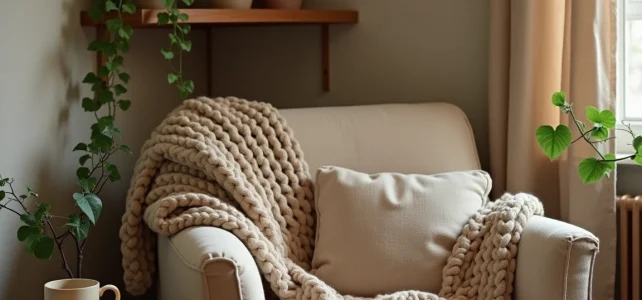
Transforming a house into a cocoon is not just about piling up blankets on a sofa. The question today is what truly distinguishes a successful cocooning interior from a simple decorative makeover. Recent data on interior design shows that the feeling of well-being depends as much on air quality and acoustics as it does on the choice of colors or materials.
Air quality and thermal comfort: the invisible criteria of a cocooning home
Content on interior decoration almost always focuses on textures, shades, and lighting. However, one angle remains underexplored: indoor air quality affects comfort as much as decor. The paints, varnishes, and glues used in a home release volatile organic compounds (VOCs) that impair the quality of the air we breathe.
Choosing low-VOC paints and labeled materials (A+ class on the French health label) significantly changes the perception of a space. An interior can appear visually warm while causing headaches or irritations if the materials emit pollutants.
Thermal regulation plays a comparable role. A wool blanket placed on a sofa does not compensate for a poorly insulated room where the temperature fluctuates. Before investing in decoration, checking the insulation of windows and the proper functioning of the heating system remains a step that determines the cocooning feeling far more sustainably than a change of curtains.
To delve into these topics of layout and domestic comfort, home tips on Ei Mag cover numerous practical aspects related to housing.
Functional zoning of the home: adapting each space for a specific use
Rather than seeking a uniform cocooning atmosphere throughout the house, recent well-being layout approaches prioritize functional zoning. The principle is simple: each area of the home meets a distinct need, and its decoration stems from that use.
| Zone | Main Use | Layout Priority |
|---|---|---|
| Reading / Rest Area | Disconnection, calm | Soft lighting, enveloping armchair, sound insulation |
| Remote Work Space | Concentration | Natural light, ergonomic chair, closed storage |
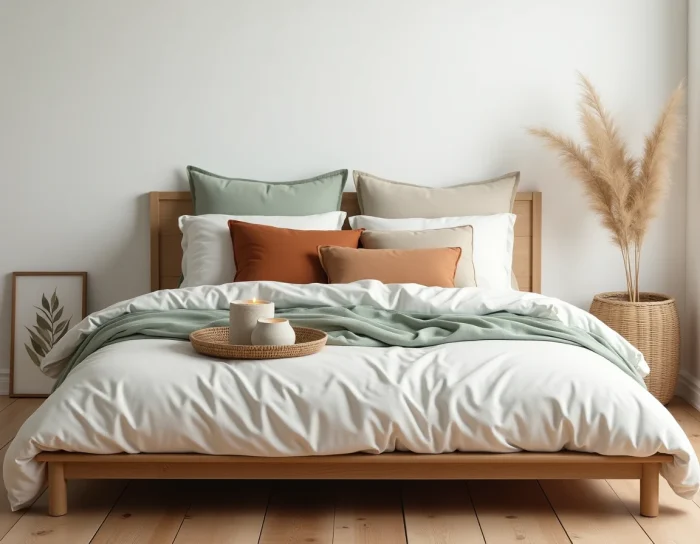
| Bedroom | Sleep, recovery | Darkening, quality bedding, cool temperature |
| Living Room / Common Area | Friendliness, relaxation | Soft materials, warm colors, multiple seating |
This division avoids a common pitfall: treating the living room as the only room deserving of decorative attention. The bedroom, for instance, gains more comfort from an investment in bedding and window coverings than from the addition of decorative cushions.
Reading corner and sensory space
An effective reading corner relies on three elements: a seat that supports the back without being rigid, an adjustable light source (floor lamp or wall-mounted reading light), and a visual separation from the rest of the room. A simple screen or a low shelf is enough to delineate the area without enclosing it.
Zoning works even in small spaces, as long as visual markers are used: a different rug, a change in wall covering, or a variation in light fixture height signal the transition from one use to another.
Reversible solutions to transform an interior without renovations
Renters represent a significant portion of French households, and major renovations are rarely accessible to them. Creating a cocoon without drilling, painting, or modifying the structure of the home requires prioritizing reversible and modular solutions.
- Removable textiles (throws, cushion covers, heavy curtains) radically change the ambiance of a room and can be changed with the seasons without leaving traces
- Mobile lighting (low-voltage string lights, table lamps, LED candles) replaces cold ceiling lights without electrical intervention
- Light partitions (screens, separation curtains, modular bookshelves) allow for functional zoning in a studio or large living room
- Furniture on wheels or stackable can adapt to changing uses of the same room throughout the day
This approach has a often-overlooked advantage: it allows for experimentation. Testing a curtain color, moving a piece of furniture, or reorganizing a reading corner costs neither time nor money in an irreversible way.
Light and colors: what the choice of shades really changes in a room
Light remains the most powerful lever for altering the perception of a space. However, not all light sources are equal when it comes to creating a cocooning atmosphere. The color temperature of the bulb matters more than its wattage: warm light (around 2700 kelvins) envelops, while cold light (above 4000 kelvins) energizes but creates a more clinical atmosphere.
Multiplying low-intensity light points creates an effect of depth and warmth that a single central ceiling light cannot replicate. Two or three accent lamps spread throughout the room are enough to transform the ambiance of a living room in the evening.
Color palette and natural materials
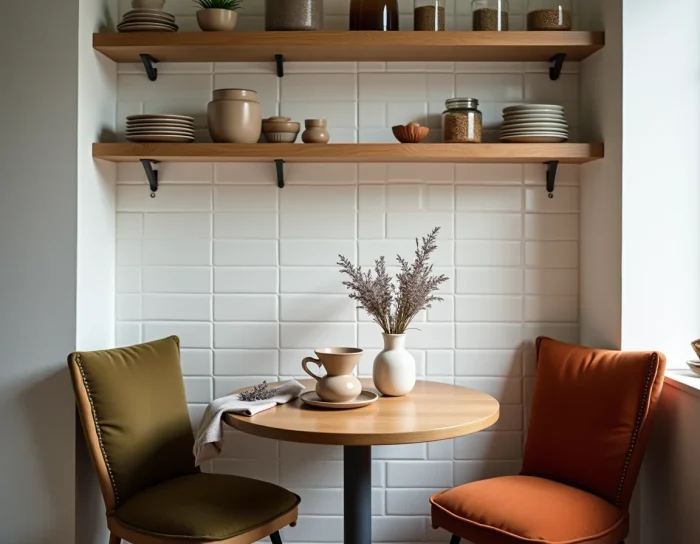
Earthy colors (ochre, terracotta, sage green) and raw materials (linen, unvarnished wood, boucle wool) are returning in cocooning-oriented decor trends. Their common point: they absorb light instead of reflecting it, which softens harsh contrasts and lightens the overall atmosphere.
In contrast, shiny surfaces (polished tiles, lacquered furniture, excessive mirrors) amplify artificial light and produce a colder effect. Pairing a dark matte accent wall with indirect lighting is an effective combination to add depth to a small living room without visually shrinking it.
Transforming a house into a cocoon relies less on the accumulation of decorative objects than on the interplay between healthy air, thoughtful zoning, appropriate lighting, and materials chosen for their real sensory impact. An interior where one can breathe well and where each zone has its function provides lasting comfort, far beyond the visual effect of a magazine photo.