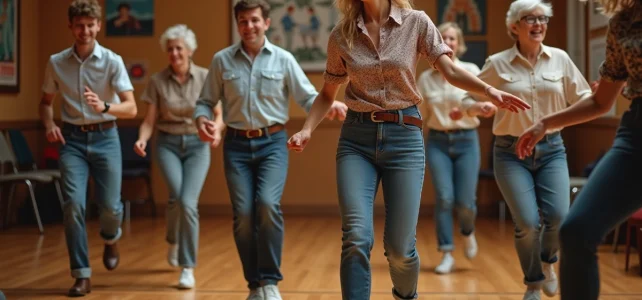
Some choruses transcend the ages without ever dissolving into oblivion, but when it comes to the Madison, the consensus exists only on paper. From one corner of France to another, preferences clash, and official lists don’t always hit the mark during major events. Here, classics are demanded, while there, a touch of originality is preferred, and it is not uncommon for the most heard tracks to be neither the latest releases nor even the original ones.
Creating a selection that hits the mark requires real flair: one must know the essential hits of the Madison, but also sense the desires of an audience with diverse horizons. The party organizer, meanwhile, walks a tightrope, constantly oscillating between respecting traditions, subtle adaptation, and the desire to innovate, so that the dance floor never empties.
You may also like : The Reimagined World of Bars: Trends, Tips, and Inspirations for Enthusiasts
Why certain tracks have become essential for the Madison
The Madison dance emerged in the late 1950s on American soil and quickly established itself thanks to its clear rhythmic structure and immediately accessible choreography. Designed for line dancing and group settings, it imposes strict criteria on the music: a stable pulse, a catchy melody, and a predictable tempo. From its early days, tailor-made tracks like Last Night by the Mar-Keys or The Madison Time by Ray Bryant Combo set the rules of the game. These songs, infused with soul and jazz, combine irresistible energy with a square rhythmic base, making collective synchronization almost natural.
What makes these standards take off is this rare mix: simple steps to remember, driven by a musical effectiveness that makes even the most reluctant want to get up. Essentials like Green Onions Madison or Baby Workout by Jackie Wilson create a lively and friendly atmosphere on the dance floor. It is this cocktail that allowed the Madison to charm France from the early 60s, with music for the Madison dance adapting to all groups, all ages, all parties.
See also : Tips and advice for better managing your money daily
Over time, the repertoire has expanded: it now includes influences from funk, disco, and sometimes electronic music. Historical pillars stand alongside recent hits like Danza Kuduro by Don Omar and Lucenzo, proving that the Madison can evolve without losing its soul. If these songs transcend generations, it is because they bring people together. They transform a sequence of steps into a collective experience. The Madison is not just a choreography: it is a suspended moment where the party becomes a shared memory.
Which tracks to choose for a successful Madison playlist according to the mood of your party
Creating a Madison playlist is like mixing a cocktail: each song adds a color, a rhythm to the evening. For a public ball or a wedding, nothing beats the retro classics: the groove of Last Night by the Mar-Keys, the pulse of The Madison Time by Ray Bryant Combo, or the vitality of Green Onions Madison (Will Burnett and his Madison Dance Trio) always make an impact.
For events bringing together all generations or in clubs, also choose familiar tracks that are compatible with the Madison choreography. Hits like You Can’t Hurry Love (Diana Ross & The Supremes), Dancing in the Street (Martha and the Vandellas), or the memorable Respect by Aretha Franklin infuse an energy that unites. Also include some French versions, by Sylvie Vartan, Johnny Hallyday, or Richard Anthony, to revive the local flavor.
If your goal is an unforgettable Madison playlist, vary the pleasures between timeless classics and new releases. Hits like Danza Kuduro (Don Omar and Lucenzo), the good vibes of Happy (Pharrell Williams), or the power of Uptown Funk (Mark Ronson & Bruno Mars) express the renewal of music for the Madison dance. Here’s an effective structure to balance the selection:
- Some soul/funk standards to start off well
- Dynamic covers that surprise the audience
- One or two recent hits to appeal to the younger generation
Always adapt your list to the mood of the evening, the culture of the audience, and the size of the dance floor. The ideal Madison playlist is never fixed: it is built in the moment, driven by the diversity and energy of the guests, and by the ability to revive this iconic collective dance at each new session.

Tips and tricks to get everyone dancing the Madison
Create a collective dynamic from the start
If the Madison dance is so popular, it’s because it relies entirely on the collective and a deceptive simplicity. To quickly mobilize guests, nothing beats opening the dance with a clearly visible host positioned at the front of the floor. The basic movements, four steps forward, four steps back, side shuffles, and quarter turns, are easily picked up and require no experience. The dancing floor should remain clear so that everyone can join the group, even the most reserved.
Adapt the animation to the diversity of the audience
To include everyone, mix timeless tracks with more current ones. Before starting the music, offer a quick reminder of the key movements: a visual signal, a few words, sometimes a collective demonstration. The goal is simple: to make everyone feel invited and comfortable. Families, friends, and colleagues find themselves on equal footing. It’s not the performance that matters, but the conviviality.
Here are some practical tips to ensure everyone’s participation:
- Encourage repetition of sequences so that everyone learns while dancing
- Chain tracks with a steady tempo to maintain the group’s rhythm
- Allow for spontaneous initiatives: laughter, variations, desires for improvisation
The iconic Madison dance asserts itself as a ground for social inclusion and sharing, far beyond technique. Accessibility here plays out in the atmosphere and the joy of being together. Stay connected to the group’s energy, adjust the duration or tempo according to the collective motivation. This is where the Madison reveals all its power: it transforms the dance floor into a space for collective expression, where each step brings people closer, and each smile weaves a shared memory.