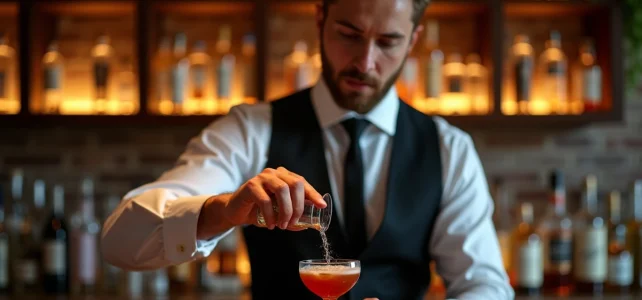
The bar landscape is evolving under the influence of trends that go beyond mere recipe creation. Between the rise of non-alcoholic beverages, digital tools for home mixology, and the revival of the in-person experience, several transformation axes deserve comparison to measure where the practices of enthusiasts and professionals are truly shifting.
Non-alcoholic cocktails versus classics: what the current offering reveals
The “no and low” segment has long been limited to syrups and sodas. In recent years, brands like Lyre’s, Everleaf, and Fluère have introduced complex bases designed for mixology, with flavor profiles that mimic or reinvent traditional spirits.
This change alters the very structure of bar menus. An establishment that previously included one or two mocktails at the end of the list now dedicates an entire section to non-alcoholic creations, sometimes with garnish and glassware work identical to that of classic cocktails.
| Criteria | Classic Cocktail | “No and Low” Cocktail |
|---|---|---|
| Spirit Base | Gin, rum, whiskey, vodka | Dedicated botanical bases (Lyre’s, Everleaf, Fluère) |
| Aromatic Complexity | Driven by alcohol and macerations | Driven by plant extracts and spices |
| Price Positioning in Bar | Standard cocktail menu price | Often slightly lower, sometimes equivalent |
| Target Audience | Spirits enthusiasts, connoisseurs | Mindful drinkers, drivers, pregnant women, the curious |
| Media Ecosystem | Books, WSET training, competitions | Specialized podcasts (NOLOW PLURIELLES), dedicated events |
The NOLOW PLURIELLES podcast, hosted by Guillaume Levilly, illustrates the structuring of this ecosystem. The episodes cover entrepreneurship in both alcoholic and non-alcoholic beverages, showing that “no and low” now functions as an autonomous sector, with its own brands, bars, and distribution channels.
The online media https://www.bart-magazine.com/ tracks these developments by documenting trends in bars, spirits, and associated gastronomy, providing a useful entry point for those wanting to understand the ongoing movements.
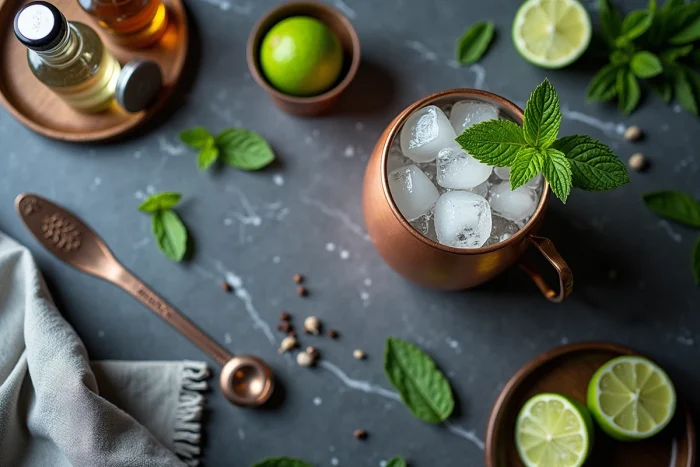
Home mixology apps: digitally assisted home bar
The home bar is no longer just a piece of furniture stocked with a few bottles. Platforms like Make Me A Cocktail allow users to filter thousands of recipes based on available ingredients at home, transforming amateur practice into methodical exploration.
On mobile, apps like Cocktailpedia gather bases of classic and contemporary recipes with searches by spirit or difficulty level. Access to mixology no longer necessarily requires professional training.
This digital democratization produces a measurable effect on habits. The enthusiast with a contextual suggestion tool experiments more, tests unusual combinations, and develops a more diverse palate than someone who limits themselves to reproducing three or four classics learned by heart.
What these tools concretely change
- Ingredient-based search reduces waste: instead of buying a bottle for a single recipe, the user discovers several cocktails that can be made with what they already have
- Level-based suggestions allow for gradual technical progression, from simple builds to complex shaking with double straining
- The community dimension (ratings, comments, shared variations) creates a feedback loop that enriches databases beyond canonical recipes
Flavors and cocktail trends: axes that restructure menus
Three directions dominate the bar menus that are renewing their offerings. The first is the “farm to glass” approach, where local and seasonal ingredients replace standardized products. A bar that works with a local farmer for its garnishes and fresh juices does not provide the same experience as one that opens cans of industrial puree.
The second direction concerns the return of aged spirits and cocktails based on whiskey or amber rum. Creations around the Old Fashioned or Manhattan are not new, but their variations with specific casks (ex-sherry, ex-port) add a layer of complexity that refreshes these classics.
The third touches on the visual and sensory dimension. Layering (stacking colored layers), crafted garnishes, and the use of specific glassware contribute to a presentation that goes beyond taste to encompass the entire experience.
Gastronomy and cocktails: a rapprochement that is accelerating
Food pairing applied to cocktails borrows the same principles as wine and food pairing. A bar that offers a tasting menu pairing bites with liquid creations blurs the line between dining and mixology. The flavors of the cocktail become an extension of the dish, not a passive accompaniment.
This rapprochement pushes some establishments to recruit hybrid profiles, capable of conversing about both wines and spirits as well as bar techniques.
In-room service and customer experience: what differentiates a memorable bar
A technically perfect cocktail served in a neglected setting loses some of its perceived value. Bars that leave a lasting impression work simultaneously on lighting, sound, service rhythm, and the staff’s ability to explain a menu without reciting a script.
The quality of service weighs as much as the quality of the liquid in the glass. A bartender who tailors their recommendation to the customer’s profile (sweet preference, aversion to bitterness, desire for discovery) creates a relationship that fosters loyalty well beyond the recipe.
- Customizing the cocktail at the order (adjusting the sugar level, choosing the base spirit) becomes a standard in high-end establishments
- Real-time customer education (explaining ingredients, origin of the spirit) transforms consumption into a cultural moment
- The care given to glassware and serving temperature signals a level of expectation that the palate then confirms
The bar that combines technical mastery, credible “no and low” offerings, and attentive service meets the expectations of an increasingly segmented clientele. The boundary between curious amateur and professional is blurring, and it is precisely in this intermediate space that the next evolution of the sector is taking place.