
The French regulations do not concern themselves with the category of quads when it comes to imposing mandatory technical inspections upon resale. This “exception” in the landscape of motor vehicles does not exempt the seller from extreme legal vigilance. The transaction is not improvised: every step matters, every document must be in order.
At the slightest mistake, particularly regarding administrative matters or the actual condition of the quad, penalties can arise. Depending on whether the quad is homologated or not, the sales procedure can quickly shift from a simple formality to a real administrative headache. Therefore, it is impossible to overlook these distinctions before handing over the keys.
Selling a quad: what the regulations say about technical inspections
Since April 15, 2024, the landscape of selling homologated quads has changed. From now on, any quad in the L6e (light quadricycles) or L7e (heavy quadricycles) category must undergo a technical inspection before changing ownership. This regulatory turning point was established by decree no. 2021-1062 of August 9, 2021 and the order of October 23, 2023. For those whose registration dates back more than five years, there is no escaping it: a technical inspection report, issued by an approved center and dated within the last six months, must be presented. Without this document, the sale between individuals comes to a halt.
The legal framework is inflexible. The update of the registration certificate, in other words, the gray card, remains blocked if the technical inspection is lacking. Only a few situations escape the rule: agricultural quads (categories Maga, T1, T3), vehicles less than five years old, vehicles intended for scrapping, sales to a professional, or collector quads registered before 1960. Outside of these specific cases, nothing allows for bypassing the requirement for a technical inspection. This organization aims at three objectives: safety, environmental respect, and traceability of vehicles.
For those wishing to check the conditions to sell a quad without a technical inspection, the specialized site Mooteur details all possible scenarios. Before selling, it becomes essential to verify the category and age of the quad. A simple oversight can trigger a dispute, a fine, or the outright cancellation of the sale. The periodicity and obligation of the technical inspection leave no room for improvisation. The entire structure of the system aims, above all, to enhance road safety and protect the environment.
What exceptions and specific conditions apply according to the type of quad?
The law does not treat all quads the same. Depending on their use, age, or the buyer’s status, the sale sometimes escapes the requirement for a technical inspection. Here are the main situations where this obligation does not apply:
- Homologated agricultural quads (categories Maga, T1, T3) benefit from a separate regime. Designed to traverse agricultural land more than roads, they are exempt from technical inspection upon sale.
- A quad less than five years old can be sold without needing to justify a technical inspection. Here, only the age of the vehicle counts.
- If the quad is intended for destruction or sold for parts, no technical inspection is required. It is sufficient to go through an authorized professional to formalize the process.
- Selling to an automotive professional also provides an escape route, even for an older vehicle: the technical inspection report is not required.
- A collector quad registered before 1960 benefits from a specific exemption and does not need to present a technical inspection.
Each situation follows a different logic. It is the use of the quad, the identity of the buyer, and the date of first registration that determine the course of action. At the heart of these rules is the desire to protect private buyers and ensure the traceability of vehicles intended to circulate on public roads. For all other sales, presenting a valid technical inspection, dated within the last six months, remains essential.
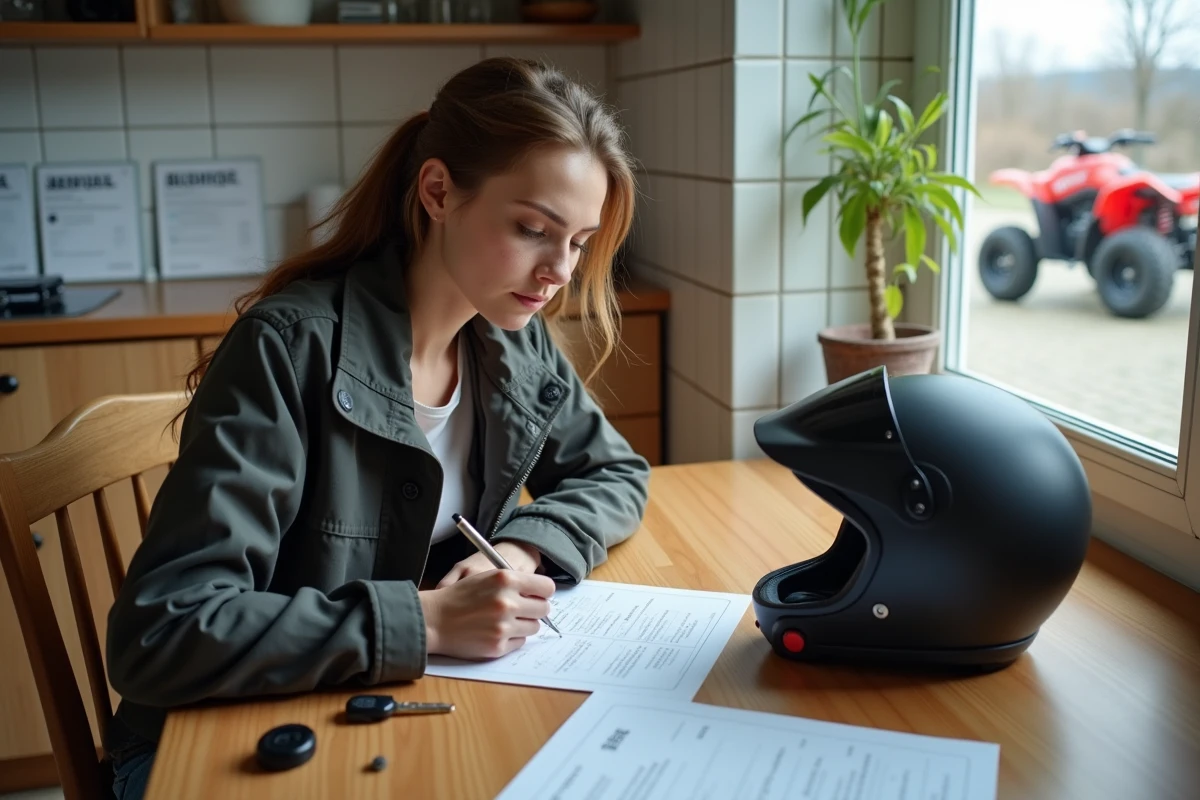
Absence of technical inspection during sale: risks and precautions to know
Selling a quad without a technical inspection is not without consequences. The seller faces an immediate administrative deadlock: as long as the report is lacking, the buyer will not be able to obtain a new gray card. The transaction risks being cut short, and the seller’s liability is engaged.
Courts, such as the Court of Appeal of Douai or Bordeaux, remind that the absence of a technical inspection is akin to a breach of the obligation of conformity delivery. The buyer can then demand the cancellation of the sale, or even obtain a full refund. From an insurance perspective, the company may refuse to cover a claim if the defect should have been detected during the technical inspection. The legal guarantee against hidden defects remains also available to the buyer in case of an unpleasant surprise.
The seller may also face a fine of 135 euros in the event of a roadside check, although this penalty does not always apply. In the presence of a major defect noted during a previous inspection, a re-inspection becomes mandatory within two months. Otherwise, it is impossible to carry out any administrative procedures.
It is therefore better to anticipate. Drafting a detailed certificate of transfer, informing the buyer about the actual condition of the quad: this transparency limits the occurrence of disputes. For a flawless file, consulting a professional in automotive law, such as Jean-Baptiste le Dall, can prove invaluable. A precaution that avoids many regrets and protects against unpleasant surprises.
As regulations evolve, selling a quad can no longer be improvised. Every omission can turn a simple transaction into a real headache. Staying rigorous ensures both your peace of mind and that of the buyer, while preserving the pleasure of riding.