
We come home from work, it’s late, we’re hungry, and we’re hesitating between a bowl of pasta and a quick salad. In chrononutrition, this evening choice is not trivial: the body metabolizes nutrients differently depending on the time of day. The evening meal in chrononutrition is based on a simple principle: to lighten the digestive load to accompany the natural slowdown of the body before sleep.
Chrononutrition Dinner: Think in Relation to Bedtime, Not the Clock
It is often said that dinner should be before 7 PM or 8 PM. In practice, this guideline does not work for everyone. A person who goes to bed at midnight can very well eat at 8:30 PM without any problem, while another who sleeps at 10 PM would benefit from having their meal earlier.
Counting two to three hours before bedtime provides a more reliable reference than a fixed time. This delay allows the digestive system time to process most of the meal before metabolism switches to nighttime mode.
A randomized trial published in Nature Medicine in 2025 compared early, late, and free eating windows, associated with Mediterranean-style nutritional education. The result: no significant additional reduction in visceral fat related to the time windows. The timing of dinner remains an interesting lever, but not a guarantee of results. This type of nuance can be found in nutritional advice on L’Art du Goût, which puts the main principles of the evening meal into context.
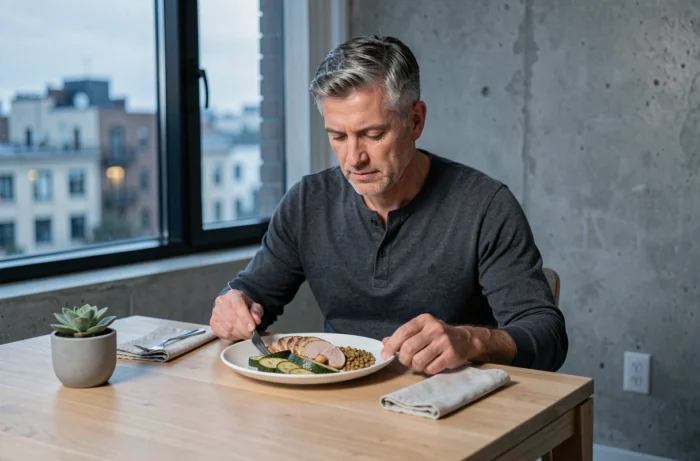
Recommended Foods in the Evening for Chrononutrition: Light Proteins and Vegetables
In the evening, the secretion of digestive enzymes decreases. The body more easily stores fast carbohydrates and heavy lipids. The chrononutritional logic therefore directs us towards easily digestible foods that are low in energy density.
What Composes an Effective Evening Plate
- Lean proteins: white fish, skinless poultry, seafood, or eggs. These sources provide the necessary amino acids for nighttime recovery without overloading digestion.
- Cooked or raw vegetables in free quantity: zucchini, green beans, broccoli, spinach, salad. Their richness in fiber and micronutrients compensates for the low caloric density of the meal.
- A drizzle of olive or rapeseed oil for fatty acids, without excess. A tablespoon is sufficient.
- Legumes in small portions (lentils, chickpeas) if lunch was light in complex carbohydrates, to avoid nighttime hunger.
Bread, which is very present at breakfast and lunch in chrononutrition, disappears from dinner. Heavy starches (pasta, white rice, potatoes) are also set aside in the evening. The idea is not to starve oneself, but to reduce the glycemic load at a time when insulin is less effective.
What to Avoid and Why
Hard cheeses, recommended in the morning in chrononutrition, have no place in the evening. Their saturated fat content slows gastric emptying. Sweet desserts pose the same problem: the late glycemic spike disrupts falling asleep.
Alcohol, often associated with dinner, inhibits melatonin secretion. Even a glass of wine can fragment sleep in the following hours, partially negating the benefits of a well-constructed meal.
Examples of Chrononutrition Menus for the Evening
Moving from theory to the plate requires concrete ideas. Here are three evening meals that respect the principles without falling into monotony.
| Menu | Main Dish | Side Dish |
|---|---|---|
| Light Express | Steamed cod fillet | Sautéed zucchini, lemon, fresh herbs |
| Vegetarian | Mushroom and spinach omelet | Lamb’s lettuce salad, walnuts, rapeseed vinaigrette |
| Filling | Grilled chicken breast | Small portion of green lentils, steamed broccoli |
The “filling” menu is suitable for physically demanding days or when lunch was insufficient. The “light express” menu is aimed at evenings when dining is late, less than two hours before bedtime. We adjust the meal’s density to what happened during the day, not to a rigid rule.

Sleep and Digestion: The Real Test of Chrononutrition Dinner
A well-calibrated evening meal is measured the next morning. If you wake up feeling heavy, the dinner was probably too rich or too late. If you wake up hungry to the point of not sleeping well, it lacked proteins or a minimum of fiber.
The evening chrononutrition aims for a precise balance: enough nutrients to last through the night, not enough to mobilize the digestive system during sleep. Light proteins play a key role here, as they promote the synthesis of serotonin and then melatonin, without causing an insulin spike.
Results vary according to each person’s metabolic profile. A very physically active person tolerates a more substantial dinner better than a sedentary person, even at the same time. The determining factor remains the quality of sleep and energy levels upon waking, not a theoretical calorie calculation.
The evening meal in chrononutrition is not a sacrifice. It is the time when we eat light because the body asks for it, not because a chart imposes it. Adapting the contents of the plate to the real rhythm of one’s day yields better results than following the same protocol every evening, regardless of accumulated fatigue or activity.