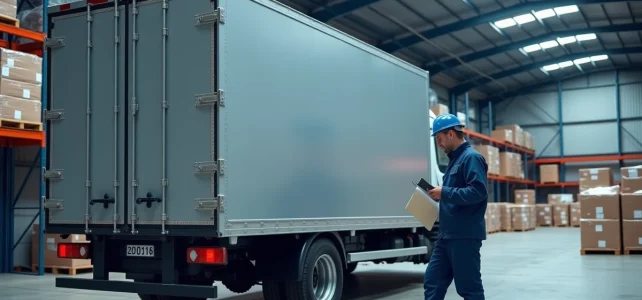
Comparing the large utility vans on the market involves measuring sometimes subtle differences across three axes: overall length, usable height, and loading volume. These dimensions directly determine the type of goods that can be transported and the profitability of each delivery route. The following comparison confronts the dimensions of the main models available in 2024, taking into account their longest versions with a maximum authorized weight (PTAC) of 3.5 tons.
Extended wheelbase and constant PTAC: the trend redefining the large van
Since 2022-2023, several manufacturers have revised their long chassis to offer larger wheelbases without exceeding the 3.5-ton PTAC threshold. The Renault Master IV, the restyled Mercedes Sprinter, and the Fiat Ducato MY2024 illustrate this logic: gaining useful volume without crossing into the heavy vehicle category.
The reason is economic. A vehicle classified as a heavy vehicle requires a C license, a specific technical inspection, and higher operating costs. Extending the wheelbase while remaining under 3.5 tons allows e-commerce and urban BtoB transport professionals to load more with just a B license.
To better understand the size of the largest vans available, one must look beyond the announced volume and compare the actual usable lengths, which vary according to the wheelbase and the chosen configuration.
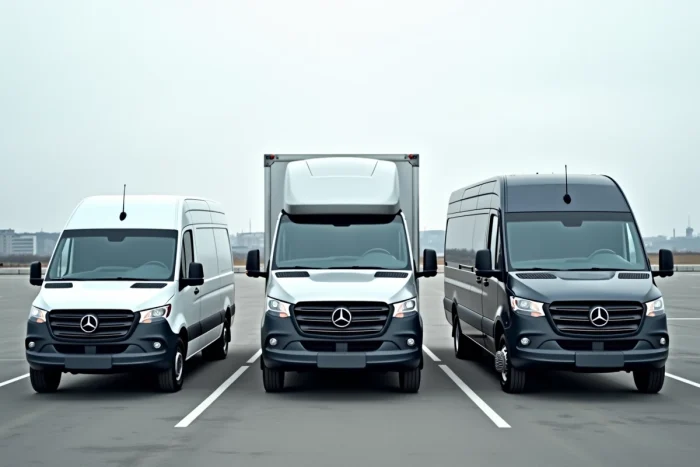
Comparison table of the largest utility vans in long version
The table below gathers the models offered in L3 or L4 versions (the longest available under 3.5 t). The values correspond to the maximum configurations announced by the manufacturers for the current generation.
| Model | Longest version | Max loading volume | Segment |
|---|---|---|---|
| Renault Master IV | L3 | Among the highest in the segment | Large van |
| Mercedes Sprinter | L3 / L4 depending on market | Segment reference in usable height | Large van |
| Ford Transit | L4 | Volume among the most generous | Large van |
| Fiat Ducato MY2024 | L4 | Historically the largest volume of the Stellantis trio | Large van |
| Volkswagen Crafter | L4 | Comparable to the Sprinter (shared platform) | Large van |
| Iveco Daily | L4 | Very extensive range, several heights | Large van / chassis-cab |
The Volkswagen Crafter and the Mercedes Sprinter share the same platform, which explains their almost identical exterior dimensions. However, the interior layouts and the position of the wheel arches differ, which alters the usable width on the floor.
Usable width and loading height: the differences that volume alone does not show
A loading volume displayed in cubic meters does not tell the whole story. Two vans advertised at the same volume can have notable differences in width between wheel arches, a determining criterion for loading European pallets (80 cm wide).
The Fiat Ducato and its Stellantis derivatives (Peugeot Boxer, Citroën Jumper) have long been known for providing a width between wheel arches sufficient to accommodate two pallets side by side. The Ford Transit L4, despite a generous volume, has a more protruding wheel arch that reduces this usable width on the floor.
- The width between wheel arches determines whether two European pallets can fit side by side without forcing.
- The rear door height conditions the loading of furniture, appliances, or tall logistics rolls.
- The usable length on the floor (different from overall length) depends on the thickness of the cabin/loading area partition.
- The loading threshold, often overlooked, varies by several centimeters between models and directly impacts the difficulty of manual loading.
The Mercedes Sprinter in high roof version (H3) offers an interior height that places it among the references for professionals transporting bulky parcels. In contrast, the Renault Master IV has focused its gains on the usable length on the floor rather than on height.

Electric versions of large vans: dimensions that change the game
Manufacturers are now concentrating their dimensional investments on electric versions. Batteries housed under the floor modify the loading threshold and sometimes the usable height. The Renault Master E-Tech, the Mercedes eSprinter, and the Ford E-Transit are available in long configurations, but the elevated floor due to the battery pack reduces the actual volume compared to the equivalent diesel version.
This loss of volume varies depending on the chosen architecture. Some models (Sprinter, Crafter) have opted for integration of the cells into the chassis, which limits the impact on floor height. Others, like the Ducato Electric, have a significantly higher loading threshold.
Low emission zones (LEZ) reinforce this migration. In several French metropolitan areas, LEZ regulations combine Crit’Air sticker rules with size constraints for parking and deliveries. A diesel large van with a Crit’Air 2 sticker may be denied access to certain delivery time slots in city centers, making the electric version more relevant despite a slightly lower volume.
Last thermal generation and Euro 7 standard: a fixed size for diesel versions
The current diesel large vans will be among the last approved under Euro 6e before the entry into force of Euro 7. This regulatory constraint pushes manufacturers to freeze their diesel platforms and transfer new wheelbases to electric versions.
For a professional buying a large diesel van in 2024, this means that the dimensions available today are unlikely to change. The Fiat Ducato L4, the Ford Transit L4, and the Iveco Daily in long version represent the maximum size that these manufacturers will offer in thermal. Any future dimensional evolution will go through electric or hydrogen platforms.
Choosing the largest van on the market in 2024, therefore, means deciding between a diesel with a definitive size but increasingly restricted urban access, and an electric with a slightly reduced volume but suited to the LEZ constraints of the coming years. The pure size criterion is no longer sufficient: the truly usable dimension now depends as much on the engine as on the chassis.