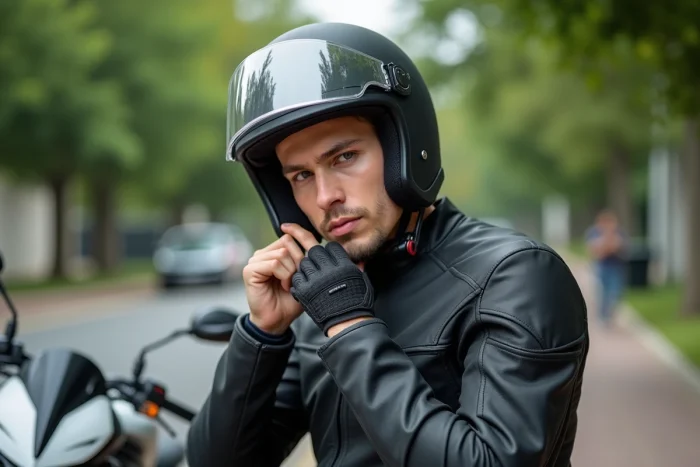
A slightly too tight helmet increases the risk of prolonged headaches by 35% among regular motorcyclists. Some high-end models, although certified, exacerbate pressure on sensitive points of the skull. A simple oversight in adjustment or maintenance can lead to persistent pain, or even skin or hair issues. Manufacturers recommend replacing the helmet every five years, regardless of visible wear. This guideline, often ignored, aims to preserve not only safety but also comfort and scalp health.
Understanding why a motorcycle helmet can cause headaches
Wearing a helmet every day goes far beyond just a protective reflex: a poorly fitted piece of equipment can sometimes turn an ordinary ride into a sneaky ordeal. Localized pressure, especially on the temples, is the primary cause. As soon as a shell poorly fits the skull or the internal foam no longer provides the expected comfort, discomfort sets in, persistent and tough. In terms of certification, no label guarantees the absence of pain: each head tells its own story, and the best model for one can become a real source of tension for another.
The quality and density of the internal foam have a direct impact on comfort. Compressed, rigid, or deformed foam increases pressure in the wrong places. Added to this are the noise of the road and continuous vibrations, which, under the shell, eventually fatigue the neck and heat the scalp. Tension rises almost unnoticed by the rider.
Another often overlooked point: vision. A limited field of vision or an imperfect visor forces compensatory neck movements and muscle tension, synonymous with frequent headaches. For glasses wearers, the situation becomes even more complicated. The arms caught between the foam and the head, over the kilometers, quickly take their toll.
Before blaming the helmet itself, it’s better to inspect the strap adjustment, ventilation, integration of accessories, and even posture on the motorcycle. Reading resources like headaches while wearing a motorcycle helmet helps to understand the real causes and refine equipment choices.
Choosing and maintaining your helmet: practical tips for preserving your well-being
A precise fit
An adequate size is not enough: you need to try it on, feel the pressure on the forehead and temples, test different shell shapes and padding. Modular models offer a real advantage on long trips, thanks to their versatility and customizable configurations.
Here are the main aspects to watch for when choosing:
- The condition and thickness of the internal padding: these elements, directly in contact with the skull, make all the difference over long distances.
- A clean, wide, and clear visor: it prevents eye strain and maintains comfort during prolonged rides.
Maintenance, a routine not to neglect
A well-cared-for helmet prolongs safety as much as comfort. Internal foams deserve regular cleaning with lukewarm water and mild soap, especially after hot weather or rainy sessions. To maintain visibility, opt for an anti-fog microfiber spray on the visor, which is particularly effective on black or matte finishes, which are often more sensitive to sun marks.
Don’t underestimate the neck roll: beyond the sensation of warmth, it supports the neck, limits tension, and insulates without adding pressure. With each added accessory, ensure the skull’s freedom is preserved. Compatibility with glasses should be checked, as well as the quality of ventilation to avoid overheating and excessive sweating.

Hair, comfort, and hygiene: daily life under the helmet
Using a helmet every day engages the head and hair in a whole new routine. Heat, humidity, friction: the scalp sometimes pays the price for a poor choice of foam or aging interior. To reduce discomfort, it’s worth adapting your hairstyle: low ponytails, short and airy cuts, each option helps distribute pressure and reduce breakage.
Another point of vigilance is the type of glasses arms. Too thick or rigid, they quickly cause pain behind the ear and at the temples. Favoring thin, flexible arms that fit well with the shape of the helmet makes a real difference on the path to relief.
Visibility, too, should not be overlooked. A poorly positioned helmet, a damaged visor, or fog accumulating inside eventually makes every outing painful. Matte black shells retain more heat, increasing sweating. Investing in good ventilation or a balaclava helps keep the head cooler. Finally, ensuring that the foam adequately insulates the ears avoids many daily inconveniences.
The search for lasting comfort sometimes requires trial and error. Don’t hesitate to adjust, change materials, or rethink your equipment until you find that perfect balance: the helmet that disappears from thought and makes the road smoother. Because on two wheels, freedom should not be exchanged for pain.