An animal that the law struggles to define, a species that is as disturbing as it is intriguing: the dingo is not classified among domestic dog breeds, nor recognized as a completely wild species according to Australian legislation. This hybrid status provokes ongoing scientific and legal debates, directly impacting the protection measures applied.
Classified both as a threat to livestock and a key player in ecological balance, it is subject to contradictory policies, ranging from active regulation to strict preservation in certain national parks. This ambiguous positioning shapes its daily life, its interaction with the territory, and the strategies implemented to ensure its survival.
Who is really the dingo, this wild dog of Australia?
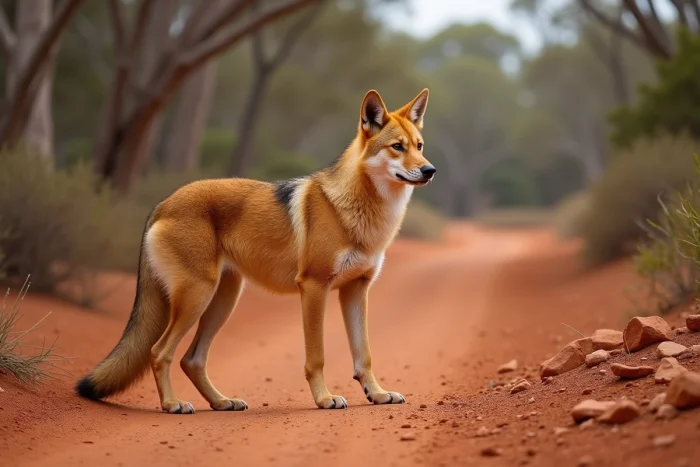
A unique animal in the Australian mosaic, the dingo wild dog of Australia occupies a singular place in the continent’s fauna. Bearing the scientific name canis lupus dingo, this canid perfectly illustrates the porous boundary between the domestic world and wild life. Established on Australian territory for nearly 4,000 years, the dingo has forged a lifestyle tailored for arid lands and vast expanses.
Its physique leaves little room for doubt: slender build, short coat ranging from sandy to reddish, upright ears, and bright eyes. Its bushy tail extends its nervous silhouette. An adult measures around 60 cm at the shoulder and weighs 15 to 20 kg. Both fast and enduring, it constantly adapts to the harshness of the Australian bush.
The question of its status remains a topic of debate. Alternately presented as a symbolic wild dog or as a risk to livestock, the dingo crystallizes tensions between farmers, researchers, and nature defenders. Its genetic proximity to wolves and dogs adds to the confusion. For several decades, crossbreeding with domestic dogs has threatened the original lineage, making any reliable estimation of wild populations difficult.
Much more than a predator, the dingo regulates ecosystems through its movements. It influences the presence of other species and shapes the natural balance of Australian territories. To delve deeper, the page “Dingo of Australia: behavior, habitat, and preservation of the wild species Friends of Animals” highlights the richness of this subject, at the intersection of scientific disciplines and local traditions.
A unique lifestyle: between hunting, family, and wide open spaces
The dingo tirelessly roams the most isolated lands of Australia. Its social organization, remarkably efficient, relies on pack life where every role matters. Forget the image of the solitary dog: here, family is the foundation. A dominant couple, close-knit descendants, and a transmission of knowledge that ensures the group’s survival, especially for hunting.
To better understand its habits, here are the pillars of its lifestyle:
- Diet: strictly carnivorous, the dingo feeds on small mammals, birds, and sometimes reptiles depending on the terrain.
- Adaptation: depending on resources or the season, it adjusts its hunting strategies, shifting from solitary to collective hunting when the game demands it.
- Mobility: it frequently travels hundreds of kilometers in search of food and water, exploring both deserts and wet forests.
This unparalleled mobility exposes each pack to various challenges depending on the region. Far from being a pet, the dingo demonstrates remarkable independence and ingenuity, essential qualities for surviving in such unpredictable environments.
The distinction from domestic dogs is self-evident: autonomy, subtlety in survival behaviors, and a visceral attachment to territory. In these lands, the dingo stands as an indispensable cog in the ecological balance.
The dingo in danger: why its protection is fundamental today
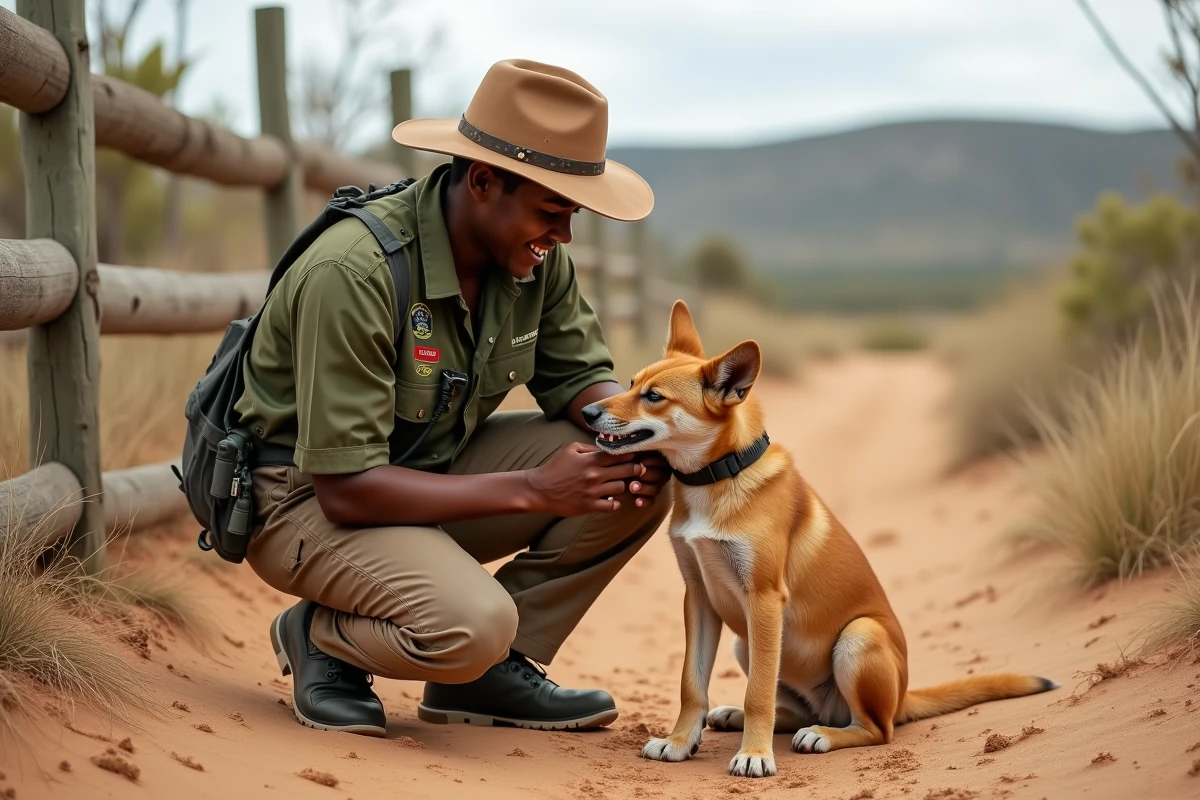
The dingo, a symbol of the wild Australian dog, is currently going through a turbulent period. Threats are multiplying and jeopardizing the sustainability of this both resilient and vulnerable species.
The loss of habitat plays a major role in this decline. Fragmentation of landscapes, roads, intensive agriculture, and growing urbanization: these obstacles fragment the traditional living spaces of dingoes. The consequences are manifold, from resource shortages to the breakdown of social bonds among pack members.
Moreover, hybridization with domestic dogs worries scientists. Repeated crossbreeding gradually erases the characteristics of the original dingo. Several studies indicate that these hybridizations introduce new behaviors and make the management of wild populations even more complex.
To better grasp the threats facing the dingo, here is an overview of the main pressures and their effects:
| Threat | Consequence for the dingo |
|---|---|
| Loss of habitat | Reduction of territories and food resources |
| Hybridization | Gradual disappearance of the pure species |
The dingo is not limited to a status of a wild animal. It embodies a significant part of Australia’s natural heritage. With each retreat of this species, a fragment of ecological balance and living memory of the continent fades away. In the face of the complexity of the issues, the question of its survival remains open, and the future of the dingo hangs in the balance of our collective choices.