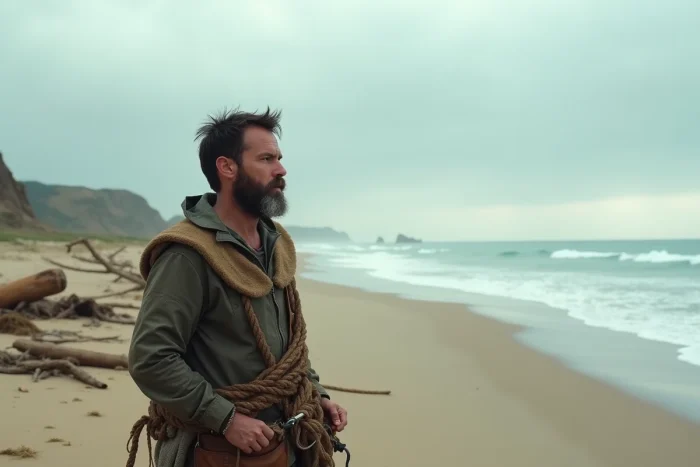
A FedEx employee stranded on an island, forced to survive without any human contact, is not a pure Hollywood invention. The film’s scenario is based on real facts and testimonies, drawn from extreme situations documented by researchers in psychology and maritime history.
Cases of isolated castaways, compelled to adopt unprecedented strategies to survive, have been recorded long before the film’s release. The cinematic adaptation directly draws from these accounts, blending authentic elements and artistic interpretations to better question human resilience in the face of adversity.
When fiction meets castaways: the incredible genesis of “Cast Away”
Behind Cast Away, there is the vertigo of truth: a man confronted with isolation, forced to relearn every basic gesture. Screenwriter William Broyles Jr. did not weave his scenes in a vacuum: he relied on concrete stories, such as that of Tom Neale, who lived alone on Suwarrow Island for years. In the film, distress is anything but abstract: lack, weariness, and daily uncertainty have all been experienced, tested, and documented.
To prepare for the role of Chuck Noland, Tom Hanks engaged in deprivation on Monuriki Island. Forced thinness, repetitive gestures, rough interactions with the environment: he carried these marks into the character’s skin, ready to do anything to improvise a shelter, a meal, a landmark. The idea of making Chuck a FedEx employee is no coincidence: it represents the head-on clash between the routine rhythm of daily life and the brutality of time suspended for survival.
The music of Alan Silvestri fades to give way to silence, that sonic void which becomes the worst adversary. Inevitably, Wilson eventually appears: a ball, but above all an artificial link to avoid sinking. The performance of Helen Hunt illustrates the pain of absence, seen from the other shore. To understand all the real roots of this film and trace the lived experience behind the fiction, one only needs to read the true story behind the film Cast Away.
The true faces of the modern castaway
In real life, some have had no choice but to face isolation and deprivation in a one-on-one confrontation with nature, far from the cameras. Their stories have moved, inspired, and sometimes been adapted for the big screen or unfolded in raw narratives.
Among these unforgettable survivors, several cases stand out:
- Robyn Davidson, who ventured alone across the Australian desert, an epic recounted in Tracks;
- Christopher McCandless, who left for Alaska without return, immortalized by Into the Wild;
- Aron Ralston, trapped by a rock for six days, whose odyssey inspired 127 Hours.
It is impossible to overlook Joe Simpson and Simon Yates (Touching the Void), Cheryl Strayed (Wild), or Yossi Ghinsberg (Jungle). All remind us that the struggle for life is fueled more by pure will than by physical strength.
Solitude, survival, resistance: what the film truly reveals
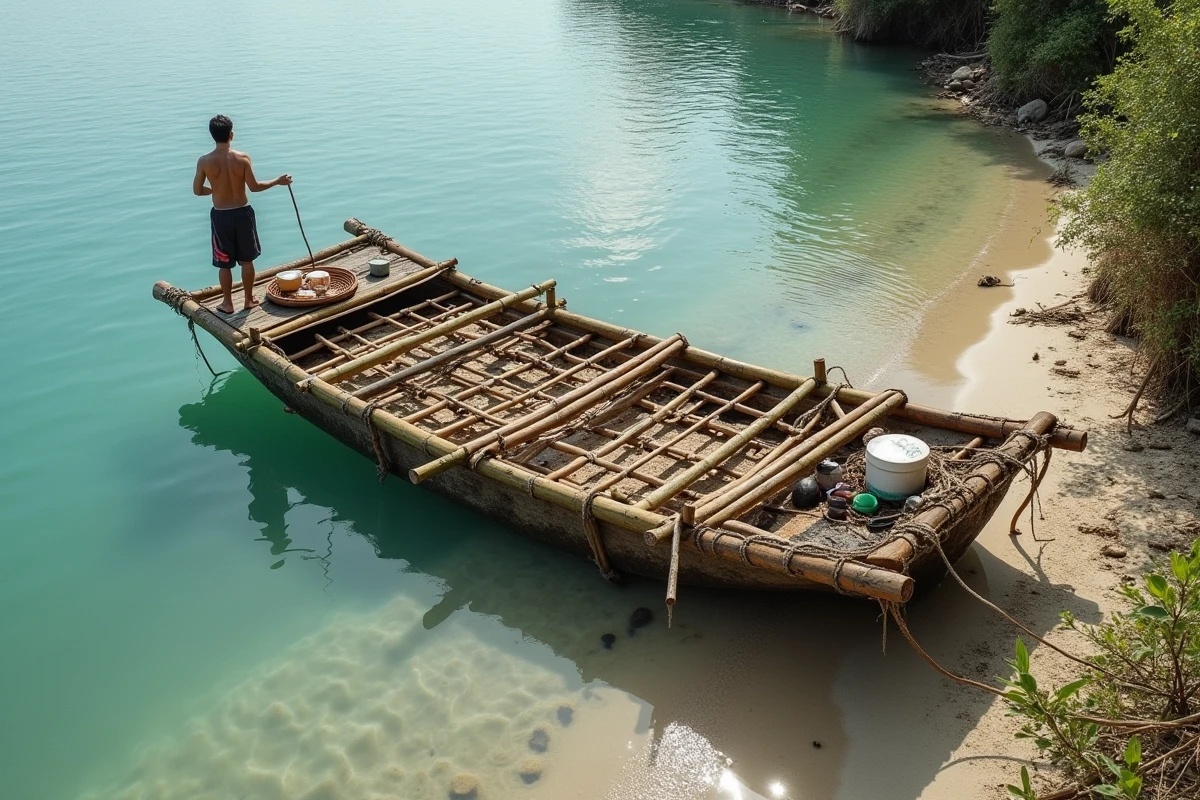
Few films strip away the superfluous with such precision as Cast Away. Chuck Noland confronts the almost total absence of comfort, hunger, thirst, and the complete disappearance of any familiar reference point. Surviving, in this context, means rediscovering the ingenuity of daily life, accepting repetition, and clinging to the smallest victory of the day.
When all dialogue ceases, the mind invents escapes: a ball, a routine, anything, as long as thought does not sink. Chuck creates rituals, masters what can be mastered, clings to the slightest semblance of control.
In the face of such trials, certain reflexes spontaneously resurface. The most common observations include:
- The repurposing of every available object, even in improbable ways;
- The creation of landmarks, rituals, to avoid losing footing and transform waiting into a bearable day;
- The preservation of a reason to hope, however fragile, to avoid tipping over.
When survival invades every minute, one invents a different relationship with the world and oneself. The refusal to fade away, in Chuck – as in the castaways who inspired him – opens a breach: by clinging, by resisting, what do we become once we are visible again? Only the bare face remains, of one who finally discovers what it was worth to be saved.