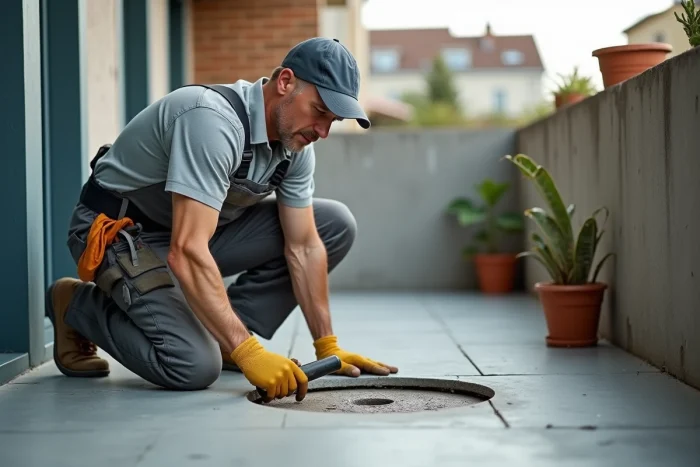
Cracks on a balcony slab are never just minor details to be relegated to the background. Their appearance can be explained by movements of the building, temperature fluctuations, or inadequate drainage. While some settle in discreetly, others evolve quickly and risk damaging the structure if left unaddressed.
Fortunately, there are concrete ways to limit damage and reinforce the robustness of your balcony. To choose the right technique, it is essential to assess the severity of the crack, the exposure of the surface, and the nature of the materials involved. A prompt intervention limits infiltrations and maintains the safety of the structure.
Why do cracks appear on a balcony: understanding the causes and risks
Concrete, far from being a fixed material, reacts over time and in response to the elements. The appearance of cracks on a balcony is governed by a series of factors, rarely isolated. Thermal variations impose stresses on the slab: with each temperature shock, the concrete contracts or expands. Without appropriate expansion joints, the structure poorly withstands these tensions and eventually gives way at the surface.
Water further exacerbates the situation. When rain seeps into micro-cracks, it penetrates the concrete, attacks the cement, and in winter, freezing accentuates the widening of the cracks. Gradually, the crack widens, sometimes to the point of compromising the metal reinforcement buried in the slab.
The supporting ground also plays a role. A settling foundation, poorly prepared or unstable ground, and the entire balance of the balcony is at risk, creating a favorable environment for new, sometimes deeper cracks.
Before any intervention, it is therefore essential to identify the precise cause. Repairing a crack on a balcony without understanding the origin of the problem risks repeating the issue soon. This vigilance regarding the quality of the concrete and masonry is all the more necessary for balconies facing significant stresses or difficult weather exposure.
How to recognize a concerning crack? Signs to watch for before taking action
Identifying a concerning crack requires a keen eye on the entire slab. Not all cracks present the same level of severity: some remain superficial, while others reveal a deeper disorder that could jeopardize the stability of the balcony.
To refine the diagnosis, several criteria come into play. Here are the main elements to examine:
- Width: below 0.2 mm, the crack is generally harmless; beyond 2 mm, caution is advised.
- Length and depth: if the crack runs through the entire slab or stretches over several meters, the problem is often more serious and may result from a foundation defect or the effects of time and frost.
The orientation also provides valuable clues. A horizontal crack on a load-bearing wall, a diagonal crack at the junction with the ground, or a crack following a slab joint should raise alarms. Similarly, the presence of infiltrated water, rust stains, or crumbling cement indicates that the situation warrants a thorough examination.
Another crucial point: the evolution of the crack. If it widens rapidly or is accompanied by localized settling, the structural risk becomes real. Multiple cracks appearing simultaneously in different parts of the balcony or walls may betray a widespread problem with the structure.
A simple way to monitor their evolution: place a plaster witness or a bead of sealant on the crack. If the witness breaks, it is a sign that the crack continues to develop. This monitoring guides the subsequent repairs and helps choose the most appropriate method.
Repairing a crack on a balcony: simple steps and tips for a lasting solution
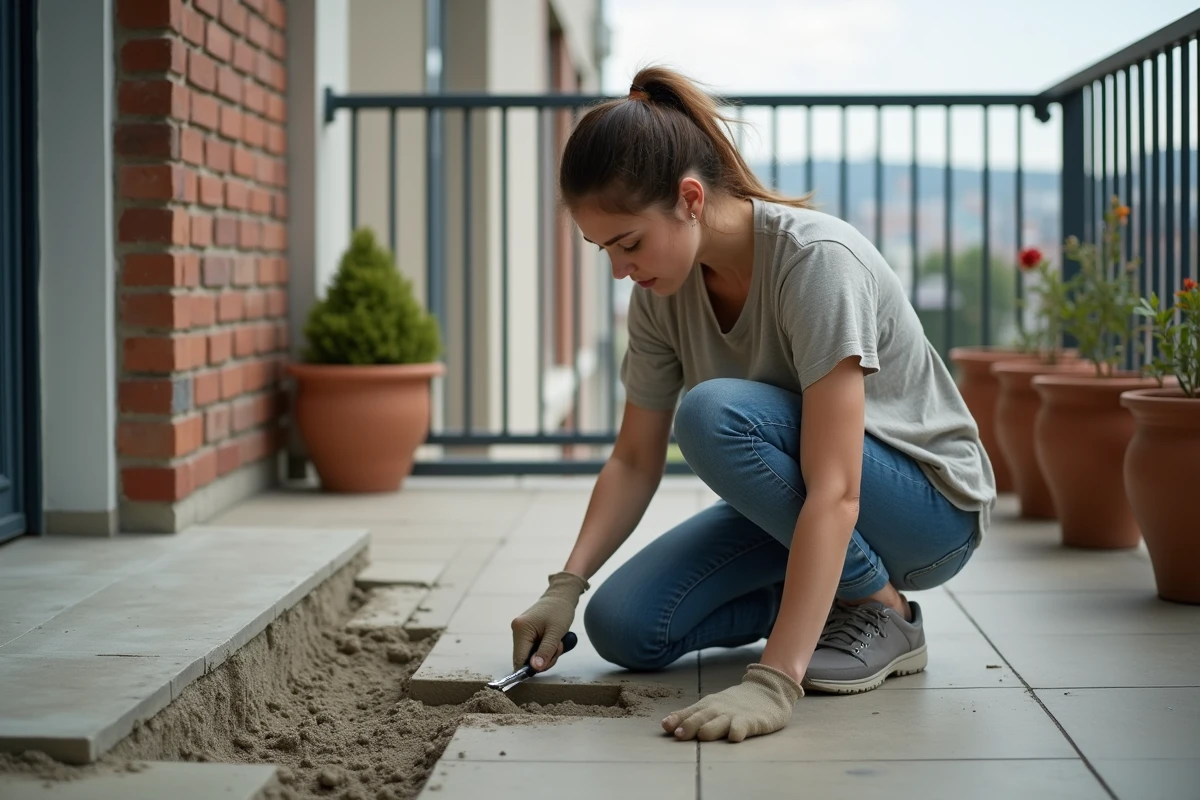
Spotting a crack is already the first step in the repair process. First and foremost, the area needs to be prepared: carefully dust, brush, and remove any loose cement or crumbling coating. The cleaner the surface, the better the repair product will adhere.
Next, you need to open the crack. Using a scraper or chisel, slightly widen it to create a clean groove. This action, far from being unnecessary, allows the repair product to anchor well and reduces the risk of reappearance.
For a concrete or masonry balcony, prefer a repair mortar enriched with flexible resins: it withstands temperature variations without cracking again. Using a trowel, apply the mortar, ensuring to fill the bottom of the crack well. If the substrate is wood or stone, choose a coating suitable for the material.
In the case of a through crack or one near an expansion joint, it is recommended to use an elastomeric sealant. This will accommodate the natural movements of the substrate and prevent the joint from reopening. Smooth the surface afterward and strictly adhere to the drying time indicated by the manufacturer.
Remember to protect the repair with a waterproof coating or specific paint. This step prevents any water infiltration and provides a valuable reprieve for your balcony. Always operate in dry weather, without rushing: this guarantees a lasting result.
A carefully repaired balcony promises serene moments outdoors, free from unpleasant surprises and insidious infiltrations. It all starts with a careful diagnosis and an appropriate repair; the rest is just regained peace of mind.