
The stop light on a Clio 3 doesn’t light up just to decorate the dashboard. Its presence indicates a serious malfunction, sometimes invisible to the naked eye, but one that doesn’t forgive: the system urges you to stop to ensure your safety and that of others. Ignoring this signal is playing with mechanics and risking much more than just a simple breakdown.
What are the most common causes of the stop light activation on Clio 3?
Behind this red warning light that appears unexpectedly, the reasons are plentiful. To act without wasting time, it’s best to know the most common reasons that lead your Clio 3 to sound the alarm.
The most usual culprit? A problem with the brake fluid. If the level drops dangerously or a leak occurs, the stop light reacts immediately. Added to this is the engine oil pressure: a significant drop may indicate a worn sensor, a failing pump, or even an forgotten oil change. These are issues that cannot wait: the engine does not appreciate such surprises.
Keeping an eye on the coolant is also imperative. An overheating or lack of fluid, linked to a porous hose or a struggling radiator, and the dashboard lights up. Electrical issues cannot be neglected either: a simple blown fuse or relay, a burnt bulb in a critical spot, and the car may refuse to go any further. These are not minor details, especially on the Clio 3 where every warning light counts.
Other causes complete the picture: anomalies in the braking system, a faulty ECU, injection problems, or engine sensors. Nothing can be ruled out; every alert deserves attention, as the vehicle’s electronic management leaves nothing to chance.
Effective solutions and practical tips to react without stress
When faced with this stop light, there’s no time to hesitate: pull over as soon as possible, turn off the engine, and ensure everyone’s safety, even if the highway or countryside doesn’t exactly resemble a garage.
To avoid unpleasant surprises, immediately get into the habit of checking the levels: brake fluid, engine oil, coolant. A few minutes are often enough to gauge the extent of the problem. If any of these points are abnormally low, correct it if you have the right product on hand; otherwise, it’s best to let a professional handle it.
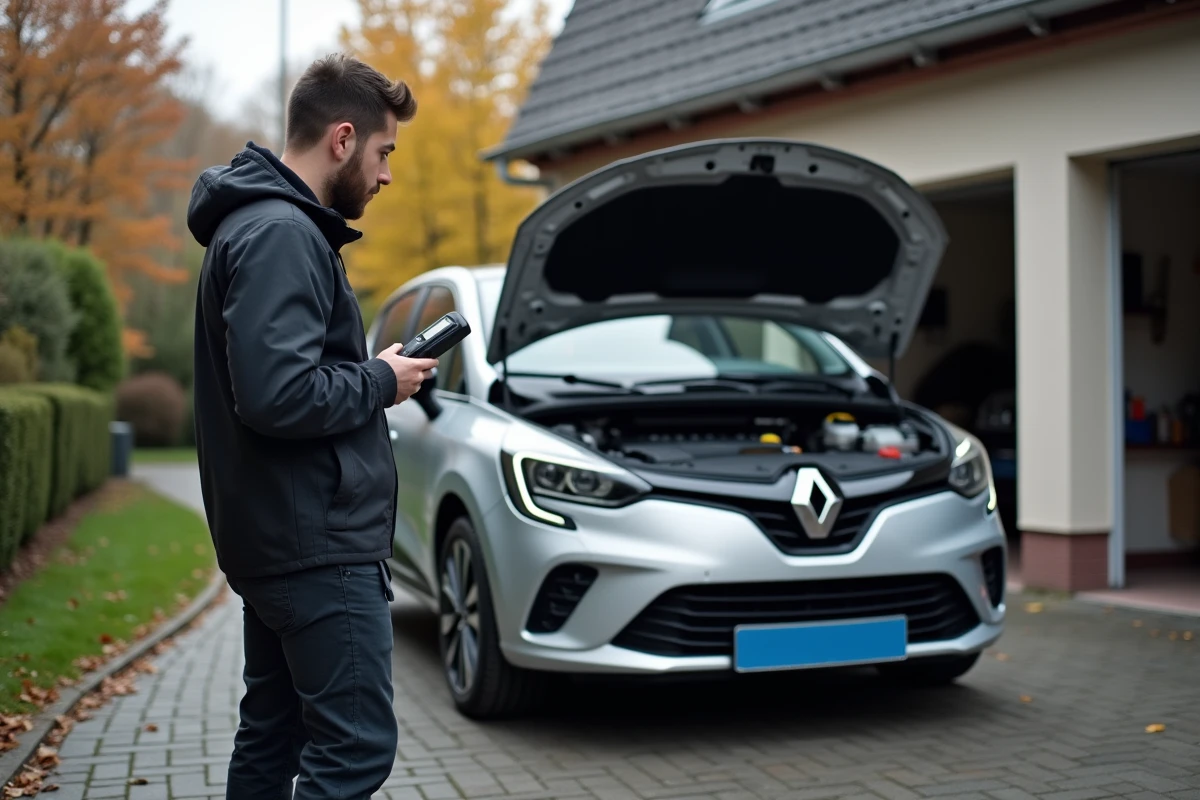
Among the tools that can make a difference, the OBD-II electronic diagnostic is worth mentioning. It allows you to read fault codes and direct your attention where it’s needed: to a faulty sensor, a temperamental solenoid, a power issue, or a worn part that you barely suspected was fragile. In case of doubt, it’s better to call a mechanic without delay who will know how to get to the heart of the matter.
For those who want to explore all avenues or inventory the causes as well as the solutions, a useful resource gathers this information in detail: causes of the stop light Clio 3.
Staying calm on the road also involves prevention: regularly check fluids, replace bulbs and fuses before they fail, and follow the maintenance schedule to the letter. These simple and regular actions keep the dashboard silent, far from sudden warnings and unexpected troubles. Each trip then becomes a given, safe from warning signals.