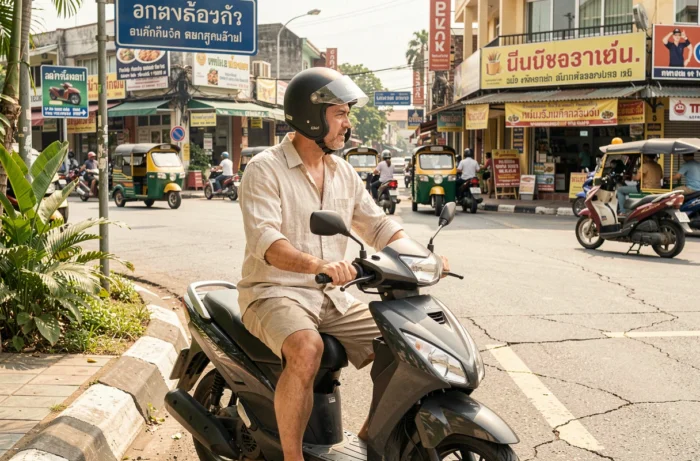
In Thailand, all motorized two-wheelers, regardless of engine size, are classified as motorcycles. Renting a 110 cc scooter in Chiang Mai or Koh Samui therefore requires the same type of licence as riding a large motorcycle. This classification differs from the one used in France and is the main reason French-speaking tourists get caught breaking the law.
Category A on your international driving permit: the only recognised category
Thai law does not recognise the equivalence between a car licence (category B) and the right to ride a two-wheeler under 125 cc. This equivalence, which applies in France under certain conditions, has no legal standing in Thailand.
To legally ride a scooter as a tourist, you need two documents: a national driving licence with category A (motorcycles of all engine sizes) and an international driving permit that also lists category A. Category A1, which appears on some European licences, is not accepted by Thai authorities for riding two-wheelers.
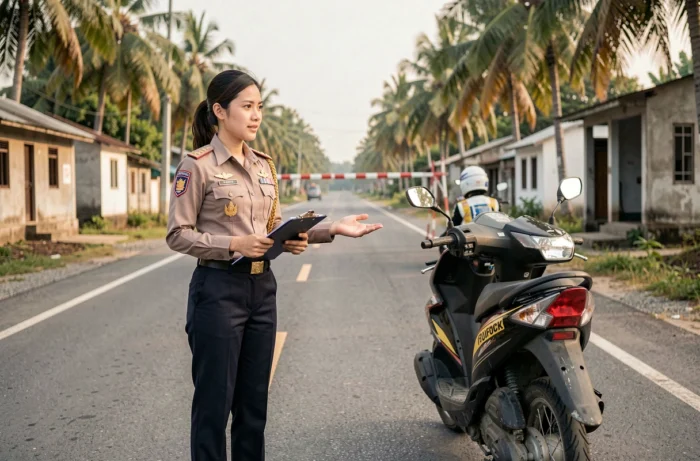
Police officers, particularly at the frequent checkpoints in tourist areas, specifically check for this category. Under Thai law, presenting an international driving permit without category A marked is equivalent to riding without a licence. This comprehensive guide to scooter licences in Thailand explains what to do before you leave.
Insurance and accidents without a motorcycle licence: the financial consequences
The fine for riding without the appropriate licence is relatively modest in Thailand. The real risk lies elsewhere: without a valid licence, you are not covered by any insurance.
Thailand’s compulsory vehicle insurance and the travel insurance you take out before departure do not cover the same risks. The former covers some of the victim’s medical expenses, but only to a limited extent. The latter, travel insurance, almost always excludes claims arising from driving a vehicle without the licence required by local law.
In an accident involving injury to another person, medical and compensation costs fall to the uninsured driver. These costs can be extremely high, especially in cases of serious injury. Several accounts on travel forums mention hospital bills running into tens of thousands of euros, with no possibility of claiming them from an insurer.
What scooter rental companies don’t always check
Most rental companies, particularly in heavily touristed areas such as Phuket and Koh Phangan, do not always ask to see a motorcycle licence before handing over the keys. This makes renting seem legal when it isn’t.
A rental company’s willingness to rent a scooter without checking your licence offers you no protection. If you are stopped or have an accident, you are the one breaking the law. Phuket has also introduced fines targeting rental companies that fail to check their customers’ licences, a measure that could be extended to other provinces.
Getting a Thai licence for a long stay: applying through the Department of Land Transport
Published regulations do not specify a single period for which visitors may use an international driving permit. Some interpretations suggest it is valid for around 90 days, but practices vary between Department of Land Transport offices. For a longer stay, obtaining a Thai licence is the most reliable option.
The process generally involves:
- A medical certificate from a Thai doctor confirming that you are fit to ride a two-wheeler
- Your national driving licence with category A, accompanied by a certified translation or your international driving permit
- A colour perception test and a reflex test, taken at the Department of Land Transport office
- At some offices, a short theory test on the Thai Highway Code
Exact requirements may vary from one office to another. Regulatory changes have been reported in recent years, but there is no confirmation that they are applied uniformly across the country.
Driving on the left and Thai traffic rules for scooters
Beyond the licence requirements, driving in Thailand calls for practical adjustments. Traffic keeps to the left, changing how you approach right of way, overtaking and entering roundabouts.
Both riders and passengers must wear helmets. Penalties for not wearing a helmet have been increased in recent years, although the exact fines may vary depending on the source. On the road, scooters share space with vehicles of very different sizes, including trucks, tuk-tuks and pick-ups. Local road users also tend to leave less space between vehicles than European drivers may be used to.
Three habits to adopt before setting off
- Check the scooter before you leave: brakes, tyres, lights and mirrors. Photograph the vehicle from every angle to avoid disputes when you return it
- Ride at a moderate speed, especially during the first few days, while you get used to driving on the left and local road habits
- Carry a copy of your international driving permit and national licence, kept separately from the originals in case they are lost or you are stopped
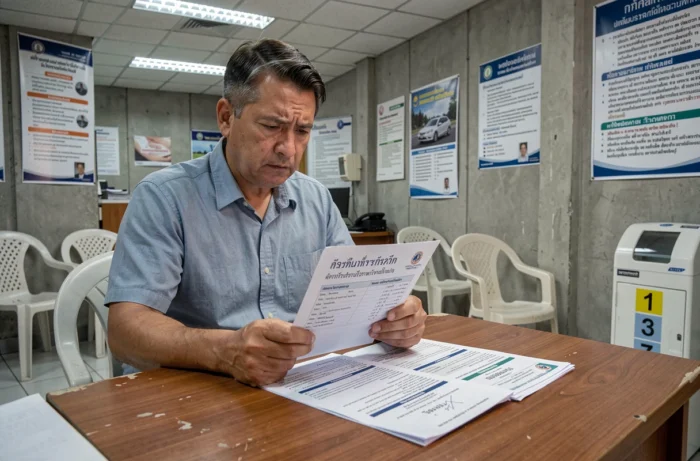
Renting a scooter in Thailand is a convenient way to get around, provided you have the right licence category. The fine for riding without a motorcycle licence is one thing; losing all insurance coverage in an accident is quite another, with far more serious consequences. Checking that category A appears on your international driving permit before you leave takes just a few minutes and can prevent complications that might otherwise last for months.